


There is a familiar problem buried inside OpenAI’s latest commercial move, and most coverage of it misses the point entirely.
OpenAI has expanded its ChatGPT advertising pilot to the UK, Mexico, Brazil, Japan and South Korea, and is testing multi-advertiser units that group several relevant ads into a single placement. The official framing is that this is about monetisation and scale. That is true, and it is also the least useful thing you can take from this development.
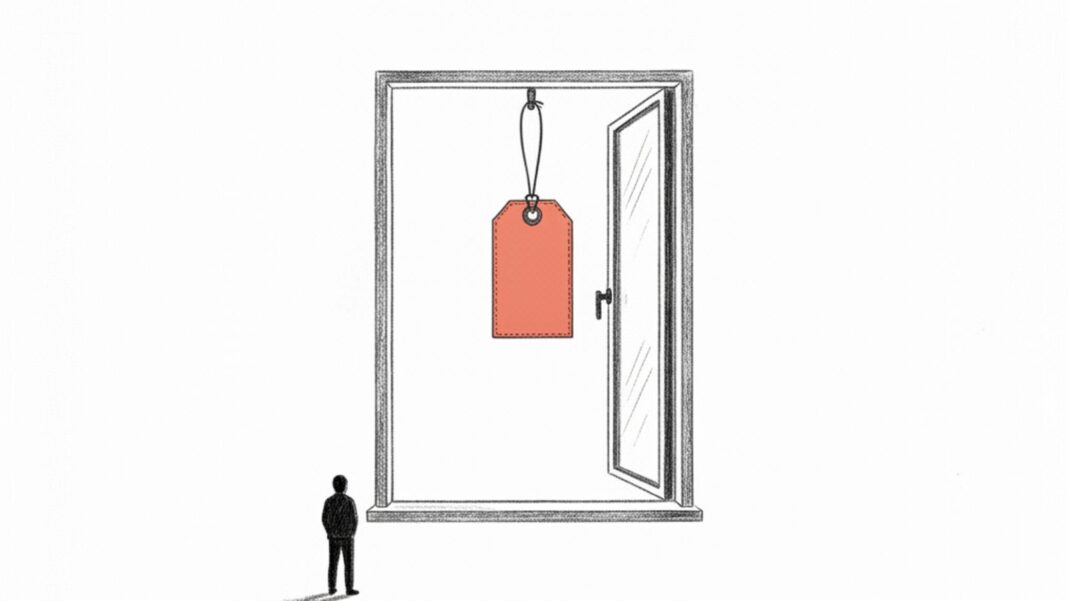
The more useful framing is this: the organic AI visibility window is closing. And it is closing in the same way, and at roughly the same speed, that organic social reach closed after Facebook’s 2014 algorithm shift. If your content team spent the last two years building strategies around appearing in AI-generated answers, you are now watching the asset underneath that strategy get repriced.
How we arrived here
When generative AI answer interfaces began surfacing in consumer products, marketers and SEO teams recognised a structural shift. Google’s position zero had already demonstrated that ranking at the top of a results page was worth more than ranking anywhere else. AI answer boxes took that logic further: one answer, one source, no scroll. The rational response, which thousands of content teams pursued, was to optimise for AI citation. Structured data, authoritative sourcing, concise factual prose, answer-formatted content. Entire content audits were rebuilt around it.
That work was not wasted. But it was predicated on an assumption that nobody stated explicitly: that the space above the fold in an AI interface would remain unmonetised. That assumption is now visibly wrong.
OpenAI’s geographic expansion is not a pilot anymore in any meaningful sense. Five additional markets, including two of Europe’s most commercially active digital advertising environments in the UK, and two of Asia-Pacific’s largest in Japan and South Korea, represent serious commercial infrastructure. Multi-advertiser units signal that OpenAI is not simply testing whether ads work in conversational interfaces. They are testing how to maximise yield per placement. That is a mature advertising product decision, not an experiment.
Google’s parallel moves confirm the direction of travel. According to Boot Camp Digital’s July 2026 updates, Google is moving Gemini-powered formats including Conversational Discovery ads, Highlighted Answers, AI Shopping ads, and Business Agent for Leads into US testing. Two of the world’s largest advertising platforms are building paid inventory inside the same answer-layer that organic content strategies were targeting. This is not a coincidence of timing. It is a structural shift in where commercial value sits.
The strongest counterargument
The reasonable pushback here is that paid and organic coexist in search, always have, and organic SEO did not die when Google introduced AdWords. That is factually correct. Organic search traffic still constitutes a substantial share of web visits for most publishers and brands, two decades after paid search launched at scale.
But that comparison undersells what is different about conversational AI interfaces. In a list of ten blue links, a user can visually separate the ads from the organic results and scroll past both. In a single-answer conversational interface, the architecture does not naturally produce a list. It produces a response. When a paid placement occupies or shapes that response, the displacement of organic content is more complete than it is in a traditional results page. Multi-advertiser units that group relevant ads into one placement suggest the interface is being designed to surface commercial content as the primary response, not as a sidebar to it.
The 2014 Facebook analogy holds precisely because the mechanism is similar. Organic reach did not disappear overnight. It degraded progressively, quarter by quarter, as the platform built out its paid infrastructure and algorithmically deprioritised content that was not boosted. Brand pages that had invested in building audiences found the distribution they had earned effectively became the distribution they now had to buy. The asset was not destroyed. It was repriced, upward, and sold back.
What this means for your team
Content teams and marketing directors should take two practical steps now, before budgets for 2027 are set.
First, audit what percentage of your current content strategy depends on AI answer visibility as a traffic or awareness mechanism. If you do not have a number, you cannot make a rational decision about how exposed you are. The teams who got caught by organic social decline were the ones who had never measured their dependence on it until the reach had already dropped.
Second, treat conversational AI advertising as a budgeted channel for 2027 planning, not a speculative one. OpenAI’s geographic expansion and Google’s format testing mean that by the time 2027 budgets are in execution, both platforms will have live commercial inventory in markets covering the majority of most enterprise brands’ customer bases. The question is not whether to allocate budget to this channel. The question is whether you understand the formats well enough to spend that budget effectively.
Multi-advertiser units in particular deserve attention from communications leads. Grouping several relevant ads into a single placement means your brand could appear alongside competitors in a way that is structurally different from paid search. The creative and targeting logic for that environment is not the same as display or search. Teams that assume standard paid search playbooks transfer directly will likely find the results disappointing.
Organic AI optimisation was a real and rational strategy for 2024 and 2025. It is not irrational now. But treating it as a stable, scalable channel without a paid counterpart is the same mistake that content teams made with Facebook pages in 2013. The window was real. It is narrowing. Plan accordingly.