Manufacturing has automated assembly for over a century, yet our understanding of how raw materials behave during production remains surprisingly manual. Engineers often rely on trial and error to connect a material’s recipe with its final performance. London-based Polaron, a spinout from Imperial College London, wants to bridge this gap with what it calls an “intelligence layer” for materials science.
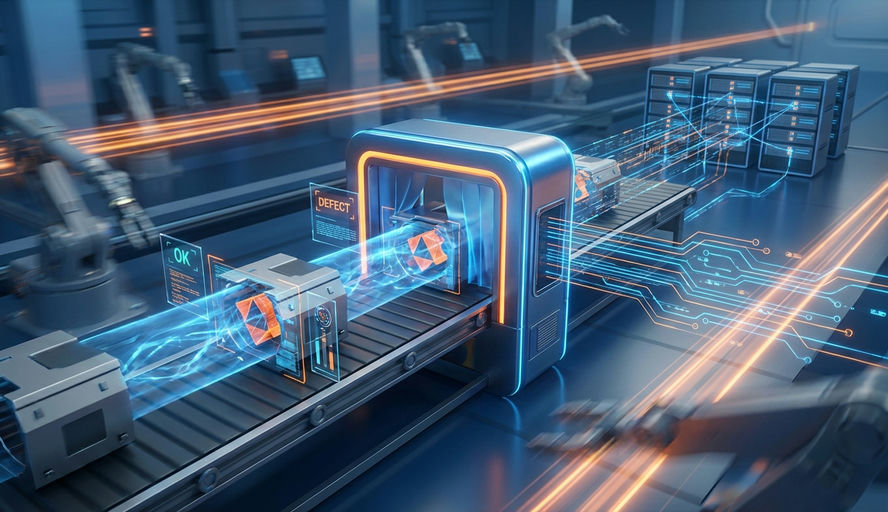
We are seeing a shift where the microscopic “fingerprints” of materials — their grains, pores, and defects — are no longer hidden. Polaron uses AI models trained on microscopy images and measured properties to predict how processing affects performance. This isn’t just a theoretical exercise; the company claims its technology is already being used by EV manufacturers responsible for a third of global production.
The $8 million seed round, backed by Speedinvest and impact-focused Racine2, highlights a growing investor appetite for “tough tech” that solves industrial bottlenecks. For European spinouts, the challenge has rarely been the quality of research — institutions like Imperial and the Max Planck Society consistently lead global rankings. The real hurdle is translating that scientific rigor into a commercial product that can scale.
By focusing on microstructure as a data problem, Polaron is turning years of academic research into a reusable tool for the automotive and energy sectors. It suggests that the next generation of deep tech winners will be those who can speak the language of both the laboratory and the factory floor.