

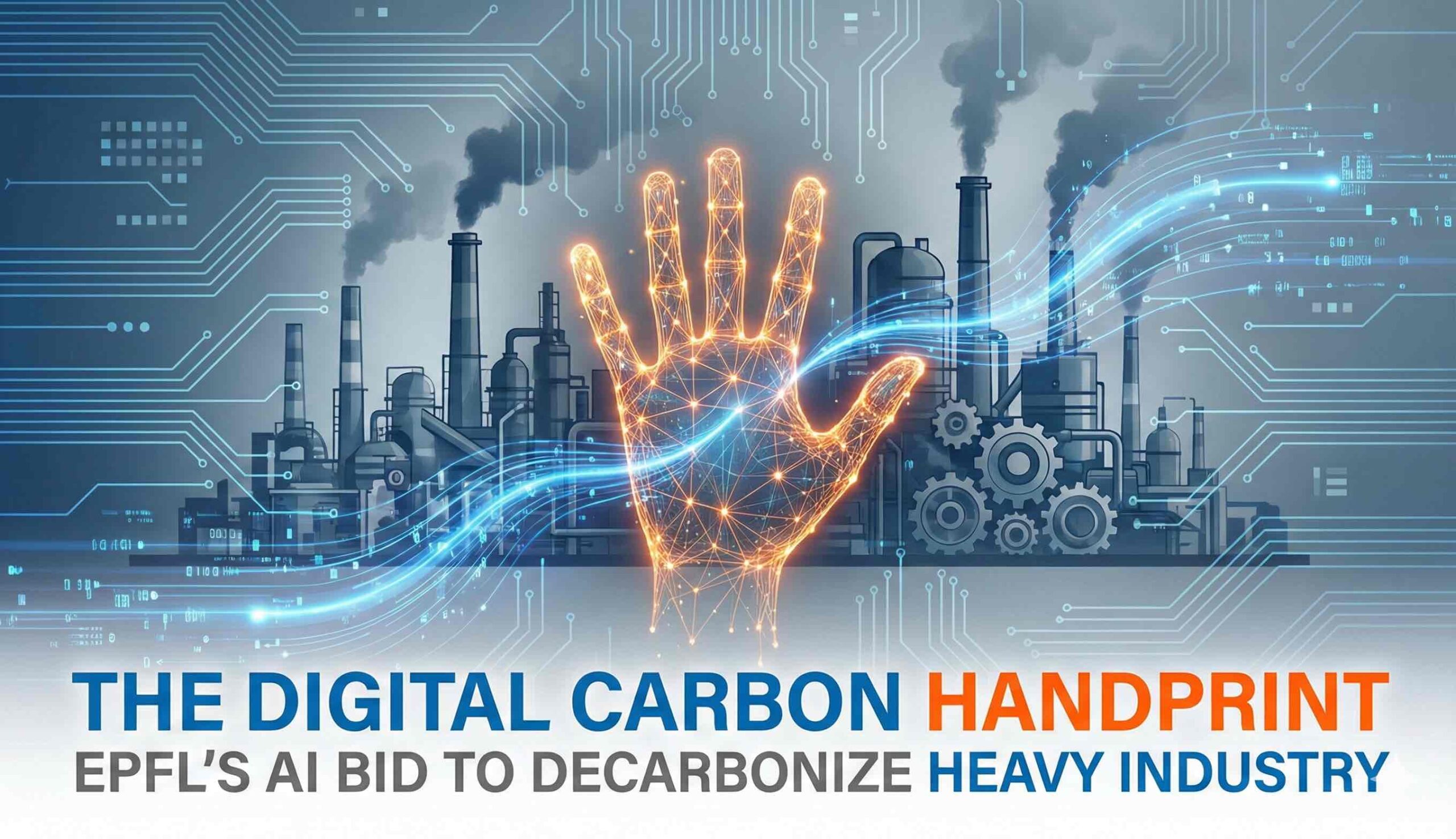

From steel mills to chemical plants, today’s university spinouts are deploying intelligent algorithms to detect, predict, and eliminate embedded carbon, transforming industrial giants into climate champions.
For decades, the decarbonization of heavy industry remained an intractable problem, often viewed as a trade-off between economic growth and environmental responsibility. Retrofitting massive steel mills or chemical plants with green technologies seemed prohibitively expensive and technically complex. However, a seismic shift is underway, driven by a new wave of university spinouts in both Europe and the United States that are rapidly translating abstract AI research into practical, commercially viable solutions for industrial emissions.
In the past week, a series of pivotal announcements have solidified the growing influence of academic ventures in this nascent but rapidly accelerating field. These spinouts are not merely iterating on existing designs; they are architecting the fundamental software layers and data-driven insights that will redefine industrial sustainability.
The AI-Powered Carbon «Handprint»
Consider EcoGenius AI, a recent spinout from the École Polytechnique Fédérale de Lausanne (EPFL) in Switzerland. This week, EcoGenius AI announced a €8 million seed funding round to accelerate the development of its novel «digital carbon handprint» platform. Unlike traditional carbon footprint tools that merely measure emissions, EcoGenius AI leverages advanced machine learning to identify the precise points in complex industrial processes where carbon can be eliminated or reduced. Their breakthrough centers on a new method for integrating real-time sensor data with predictive algorithms, allowing for dynamic process optimization—a direct result of over a decade of foundational research in EPFL’s data science and materials engineering labs. This move could significantly reduce the embedded carbon in high-emissions sectors without requiring massive capital expenditures on new infrastructure.
Predictive Maintenance for Planet Earth
Across the Atlantic, Industrial Climate Solutions (ICS), a startup born from research at the University of Michigan, secured $10 million in Series A funding. While much of the early climate tech focus has been on energy generation, ICS is building the crucial «predictive maintenance for carbon» layer: an AI-driven platform that monitors industrial equipment for inefficiencies that lead to excess emissions. Their recent demonstration of a system that can detect and prevent methane leaks in natural gas pipelines—a task intractable for traditional manual inspections—highlights the immediate commercial potential. By creating a robust software ecosystem for industrial decarbonization, they are effectively turning legacy infrastructure into a proactive climate solution.
Global Partnerships and Green Investment
These spinouts are benefiting from, and contributing to, a broader ecosystem of support. The European Investment Bank (EIB) recently announced a new €500 million fund specifically targeting university spinouts in industrial decarbonization across the EU. This initiative aims to funnel early-stage capital directly into deep tech ventures that can demonstrate clear pathways to reducing emissions in hard-to-abate sectors. Similarly, in the US, major industrial conglomerates are increasingly partnering with university research centers like Stanford’s Precourt Institute for Energy and Carnegie Mellon’s Wilton E. Scott Institute for Energy Innovation to co-develop foundational AI-driven climate technologies, often leading to direct spinout opportunities and pilot projects.
The Race for Industrial Net-Zero
The implications of this trend are profound. University spinouts are no longer theoretical curiosities in the climate tech space; they are becoming key players in a global technological race to achieve net-zero. By integrating cutting-edge AI with deep industrial expertise and strategic partnerships, these ventures are not just measuring carbon—they are actively engineering it out of the global economy. The «digital carbon handprint» is moving from academic concept to industrial imperative, propelled by the dynamism of university innovation.